


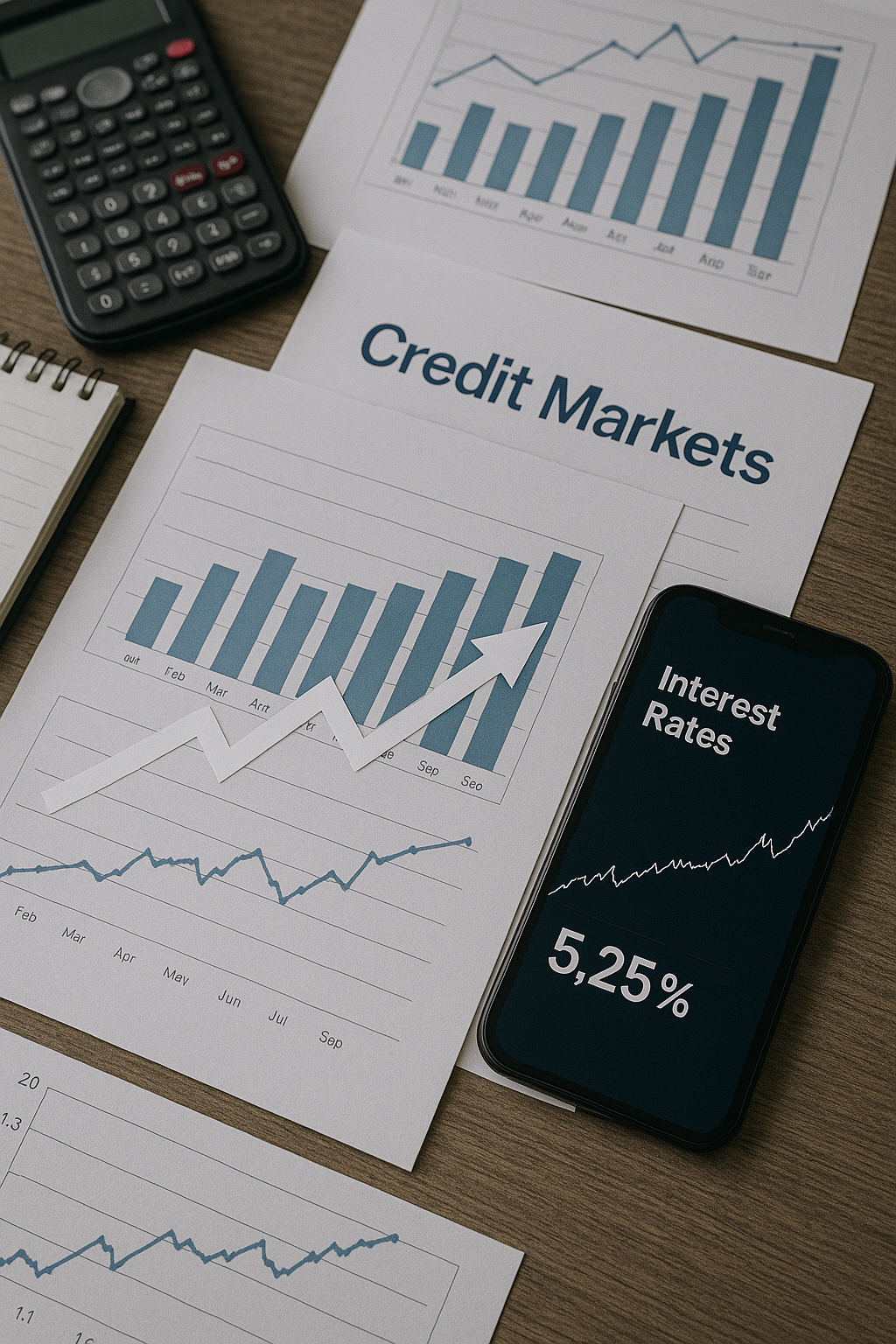
The ongoing rise in interest rates is rippling through credit markets, reshaping lending dynamics across consumer, commercial, and fintech segments. With central banks holding firm on rate hikes to combat inflation, borrowers are facing higher costs, while lenders are tightening their standards.
For consumers, the impact is immediate. Mortgage rates have hit multi-year highs, auto loan payments are surging, and credit card APRs are approaching historic levels. According to recent data, U.S. credit card balances surpassed $1.3 trillion in Q2 2025—raising red flags about household financial health.
Lenders, meanwhile, are becoming more cautious. Banks are adjusting risk models, pulling back on subprime lending, and requiring higher credit scores. This has created a funding gap that fintech lenders are rushing to fill—though they too are being forced to recalibrate their offerings.
Digital lending platforms are raising rates, reducing loan terms, and leveraging AI to better predict default risk. Some are exploring niche lending categories, such as point-of-sale financing or income-share agreements, to diversify and stay resilient in a high-rate environment.
For fintechs that rely on venture funding or securitization to support lending, rising rates pose another challenge: higher capital costs. Many are shifting toward profitability and sustainable growth instead of chasing user acquisition at all costs.
The months ahead will be a test of adaptability. As credit markets adjust to a new normal, winners will be those that balance innovation with prudent risk management.

